How New Laws and Regulations Are Changing the Trucking Industry

trucking industry

With a new administration in Washington, it is to be expected that there would be new laws and regulations implemented in many industries. The trucking industry is no exception, with several changes impacting how fleets are operated, how drivers perform their duties, and how vehicles must be maintained. Some of these laws will have minimal impact while others could cause significant changes in the way trucking companies do business.

Electronic Logging Devices

In December 2017, mandated Electronic Logging Device (ELD) regulations went into effect. Because proposed rules could limit drivers to between 60 and 70 hours in seven or eight days, ELDs will easily be able to track a driver’s hours behind the wheel. Drivers have been concerned that the ELD will lead to over-monitoring by employers, although all the ELD does is keep accurate records. However, the ELD cannot transfer data as it must be uploaded by the driver.

If pulled for a roadside inspection, the inspector can request that the driver upload the ELD for the last eight days. The ELD is actually a benefit to drivers as it eliminates deadhead miles, eliminates paper logs and helps keep records accurate. Inspections are performed more quickly and the ELD can also store important data like speed, location and the engine date.

Carbon Emissions

Another regulation that will have an impact on the trucking industry is related to greenhouse gases. The Environmental Protection Agency (EPA) issued greenhouse gas stages in three stages in August 2012. In Phase 2, which begins this year, phases in initial standards for engines built for model year 2021 with increases in standards in 2024 and leveling off in 2027. This could mean additional costs passed to carriers from manufacturers as they work to meet the new standards.

However, the new standards should also reduce fuel consumption, which will allow carriers to possibly recoup those costs in two years. When the regulations were released, there were concerns that the new requirements could make vehicles unreliable, leading to additional truck repairs at shops like Florida Truck & Trailer CO.

Truck repair experts reported that, when the first phase of the regulations was implemented, 46 percent of owners experienced some type of engine problem in the first year, up from 42 percent in 2011. The most common problem was the electronic control module calibration with 23 percent of owners reporting those problems. The second was the exhaust gas recirculation valves with 20 percent and third was electronic engine sensors with 16 percent. All of these were critical to the new carbon emissions requirements.

Drug Testing Changes

In November 2017, the Department of Transportation published new regulations for drug testing of drivers which went into effect on January 1, 2018. Under the new regulations, four semi-synthetic opioids have been added to the screening process. These include:

  • hydrocodone
  • hydromorphone
  • oxycodone
  • oxymorphone

They also replaced MDEA with MDA. Employers are no longer required to submit blind specimens to laboratories. Collectors will discard samples provided if there is not enough for a test in order to modify the shy bladder procedure. The regulation also limits collection to urine samples.
These are just a few of the regulations that could have an impact on the trucking industry over the next year. In some cases, the ramifications could be felt for several years.
4 Cheap Ways to Get Your Car Looking Good before You Sell

auto sale

It doesn’t matter if you’re selling an old or newer car. A vehicle’s overall appearance is often the deciding factor in many buyers’ minds. As a result, it’s critical that you make your car look its best unless you’re selling it for parts. It isn’t impossible to a budget when trying to get a car in better shape before a sale. The steps in this guide can show you how:

Use Repair Kits

Dents, rust, chips and scratches often cause buyers to walk away. Most car owners can repair mild damage with easy-to-use auto body repair kits. A professional dent repair kit, for example, contains a dent puller tool that makes it possible for you to pull almost any mild-to-moderate dent until the surface pops back into its original position. Rust and scratch repair kits offer sanding and other tools designed to rub away existing damage and repair and hide marred spots. Look for kits that offer high quality automotive putty for fiberglass and metal and automotive color-match paints.

Buy Used Parts

For more extensive damage, such as panels and fenders with deep dents, rust that’s rotting through an entire section or cracked windshield or window glass, replace the parts. You can find used parts in many ways, but try the following two methods first: Post “ISO” or “In Search Of” advertisements on classified ad sites like Craigslist and in local yard sale and free trade groups on social networks like Facebook. Include the make and model of your vehicle and part descriptions. Also try to find cheap parts in local junk yards that store old and wrecked vehicles that still have many good- and excellent-condition parts.

Buy New Parts

Most vehicle owners must also buy some new parts related to the appearance of their cars. These are the types of parts that aren’t usually available previously-used condition at all or in at least an undamaged state. For example, replace brittle wiper blades or rusty wiper assemblies, cracked or dulled tail light covers and dirty interior mats. Most parts retailers offer deals and discounts, such as discounts for shopping online and a percentage off the total purchase for loyal customers. For tail light covers, pick a trusted parts dealer who sells high-impact acrylic tail light covers in clear and colored options at affordable prices.

Clean the Headlights

Although it might seem like common sense, vehicle owners often forget to deep clean the headlights. As with tail light cover cracks and dullness, small dings from rocks, natural plastic yellowing and dullness and other marks on headlights can make your car look older and worth less. Although you can find several retail auto headlight cleaning options that make it effortless to sand out dings and remove an ultra-thin layer of damaged plastic to give headlights new life, do-it-yourself methods can also do wonders at little cost. For example, rub the headlights with white, non-gel toothpaste and a damp melamine foam eraser until each headlight appears clearer. Rinse with a damp sponge and then use car wax polishing paste to remove any fine marks and make your car’s headlights gleam.

Sometimes professional work by a mechanic or auto body specialist can cost less than some do-it-yourself options, such as with multi-panel and hood replacement or re-painting the entire vehicle. Before you do certain D-I-Y tasks that require extensive labor, always compare the cost of parts and the estimated amount of time you think it will take to complete the work to the cost of parts and a professional’s estimate. Some automobile repair specialists offer low-price deals when you purchase parts through them in addition to repair services. No matter what you decide to do, following these four budget-friendly methods can typically make your car look its best without breaking the bank.

Advice for Choosing a Truck Exhaust System

truck exhaust

Your truck’s factory exhaust system is meant to get the job done and be reliable, without much else on top of that. Sure it does what it’s meant to, but that doesn’t mean it’s the best and most ideal exhaust system for your truck. If you’ve been looking at aftermarket truck exhaust systems trying to figure out if you should have one installed, and which type of system you should pick, then you will want to be sure you do all the necessary research before jumping right in.

While there are a number of different types of exhaust systems the three most common are the axle-back exhaust system, the cat-back exhaust system, and the header-back exhaust system. Here we’ll take a look at what each of these offers, as well as some other helpful advice that will help you make up your mind.

Why Install an Aftermarket Exhaust System?

Before you even look into the various systems available, it’s a good idea to get a better understanding of why people purchase these aftermarket systems at all. Your factory-installed exhaust system certainly does the trick in allowing your motor to operate, but at the same time, it limits the amount of horsepower your engine is actually able to release.

When you install a high-performance exhaust system, for example, you’ll be able to get more horsepower out of your engine and greatly improve the exhaust flow. These systems can even help in fuel economy. Of course, for others, it’s all about giving it that unique look, as aftermarket exhaust systems can be pretty sleek looking and powerful sounding. Take, for example, the cat-stack setup outlined on Black Smoke Media. This is one way to ensure you get noticed!

Axle-Back Exhaust System

With this system, you’ll be using all the same components that are used in a rear axle system. The two big benefits of this system are the fact it’s relatively easy to install and it tends to be cheaper, making it a great entry-level aftermarket system.

Cat-Back Exhaust System

With this system, you’ll be replacing all the components from the catalytic converter all the way to your mufflers. It’s a total re-do of the system and you’ll be installing new tailpipes and mufflers. Some trucks may also require a new y-, x-, or h-pipe. The cat-back system is actually the most popular one that people end up choosing. It’s a low-cost option that is pretty easy to install. Benefits of this system are better fuel economy overall, can sometimes add power, and they are tough and loud sounding.

Header-Back Exhaust System

Finally, there is the header-back exhaust system, which involves replacing all components from the header collector to your tailpipes. By doing this, you can install larger pipe diameters, which will then allow for better exhaust flow. These systems are much more labor-intensive to install and tend to be expensive.

Choose Your Exhaust System Wisely

So before you go ripping out your current exhaust system to install an aftermarket model, be sure to take the time to research the various options so you can pick the best match.

When’s the Best Time of Year to Sell a Car?

sell auto

Once you decide to sell or upgrade your car, you usually want to know two things. First, will my car sell quickly? Second, will I get the most money for my car? In order to answer these two questions, you’ll need to get the timing right. Timing your sale helps to determine how long your car will be on the market and if you will get the most money for your vehicle.

The Season

The time of year can often determine how your car will sell. Different types of vehicles are more in demand at certain times. For example, trucks typically sell best in the fall and winter while sports cars sell in the spring and summer. A junk seller or parts wholesaler may also have certain seasons in which they buy and scrap more junk cars, so you should also keep this in mind. According to one cash for car in Atlanta, pickup for recycling can depend on location, but usually aren’t impacted by season. Determine when most people will be interested in driving this type of vehicle to decide when you should list your vehicle for sell.

Mileage

A second factor to think of when it is time to sell your car is the number of miles on it. As you rack up more miles on your car, it becomes more difficult to sell. Therefore, you should consider listing your vehicle before it has hundreds of thousands of miles. By listing your vehicle while the mileage is still low, potential buyers know the vehicle’s engine still has lots of life left.

Special Events of Holidays

Many people search for vehicles during certain events or holidays. For example, during Memorial Day, President’s Day, and other sale events, old cars tend to get sold faster. Another popular time of the year is during graduation season. Many parents are looking to find their child a car for a graduation present, so if you list your vehicle during this time, there is a good chance that it will get sold.

Selling a vehicle can be difficult, but if you know the best time to list your vehicle, then the process is a little easier. Before you list yours for sale, you should remember to factor in the time of the year, the mileage, and whether this is during a holiday season or other special event. If you keep these things in mind, you should be on your way to selling your car.

4 Famous Vehicles from Pop Culture and the Tech behind Them

Some cars need no introduction. They have become such an important part of culture through television and films that their images are instantly recognizable. Fans enjoy watching famous vehicles onscreen, but the end result is the product of long hours by talented set designers and prop makers. From the streets of Gotham to the streams of time, these four iconic vehicles wouldn’t have been possible without hard work and innovation.

Delorean Time Machine

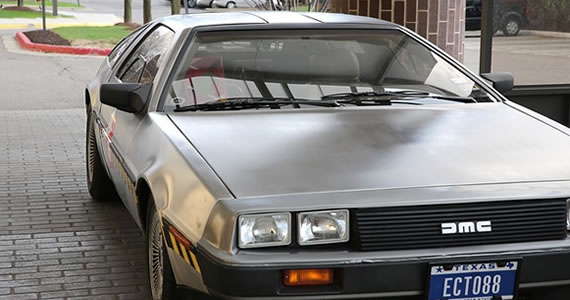
The famous vehicle’s flux capacitor and Mr. Fusion energy reactor might not really take drivers back in time, but Doc Brown’s amazing invention was built around a real car, the DeLorean DMC-12. Fewer than 9,000 models were ever produced by the DeLorean Motor Company, and five of them were used in the Back to the Future films. The DeLorean’s wacky gull-wing doors made it the perfect base for a homemade time machine. Film designers tacked on extras like a fake nuclear reactor and vents. They also added panels of lights and buttons in the car’s interior for a time machine glow.

James Bond’s Aston Martin Db5

7’s most iconic ride, the DB5 began life as a higher powered version of Aston’s Martin’s earlier DB4 model. Special effects maven John Stears outfitted a prototype of the DB5 with bells and whistles for the film Goldfinger in 1964 and instantly created a movie icon. The car was equipped with $33,000 worth of modifications, including fake machine guns mounted on the front bumper.

Other gadgets were decidedly more low tech. During one chase scene, a crew member hid in the trunk of the car and directed smoke out of a small hole to mimic an automatic smoke screen. The design team used a second stunt car for the famous scene where the Bond villain is unceremoniously ejected through the roof. The car was so popular that it went on to make an appearance in seven other films in the Bond franchise.

Kitt

Iconic 1980s TV show Knight Rider wouldn’t have been the same without David Hasselhoff’s trusty computer sidekick, K.I.T.T. who piloted the Knight 2000, the original self-driving automobile. The car was built around the body of that staple of 80s cool, a 1982 Pontiac Firebird Trans Am. Show creator Glen Larson decided he liked the body style of the new Trans Am and determined it would be perfect for his new series.

The series was able to acquire a group of Trans Ams when an auto transport trailer crashed and lightly damaged 32 brand new Trans Ams. While this could have been avoided by using a more reliable auto transport company, like Dependable Auto Shippers Inc., it ended up giving Larson more than enough cars to use on Knight Rider. Visual effects designer Michael Scheffe added a red scanner to the front bumper of the car based on the design for Cylons from Battlestar Gallactica, another one of Larson’s shows. He also filled the car’s interior with light-up electronics for a high-tech feel.

Batmobile

Unlike many other fictional rides, the original Batmobile used in the iconic 1960s series was not based on a commercially available vehicle. Designer George Barris instead used the hand-built 1955 Lincoln Futura, a concept vehicle.

Barris was running on a tight deadline of 15 days and he raced to add extra features to the car. He painted it black with red-orange trim and altered the car tailfins to mimic the look of a bat’s wings. He then installed a steel safety roll bar with pulsating lights over the passenger and driver’s seats. To complete the superhero design, Barris added a large afterburner on to the rear end of the car.

Whether they’re being driven back in time or racing to defeat criminals, these iconic rides have captured the imagination of audiences everywhere. By combining technical know-how with automobile engineering, designers and special effects teams have created the world’s most recognizable characters on wheels.