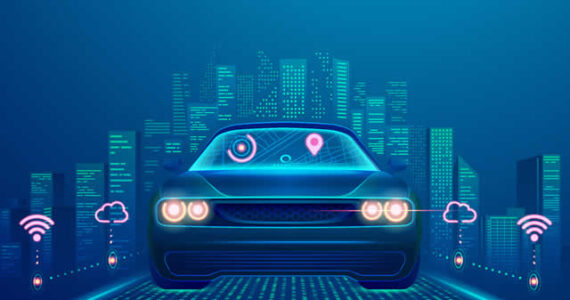
A connected car is a vehicle designed with integrated internet connectivity, which allows it to share data with devices both inside and outside the vehicle.
This advanced technology integrates and interlinks vehicles, enabling them to communicate with various other devices, such as smartphones, traffic signals, and even other vehicles, effectively creating an expansive network of interconnected systems.
Featuring a range of sophisticated elements like communication devices, software, and safety features, connected cars are at the forefront of automotive technology, promising not only enhanced user experiences but also a higher level of safety on the roads.
By tapping into real-time data and employing advanced sensor technologies, connected cars can alert drivers to potential dangers, automatically notify emergency services in the event of a collision, and even adhere to speed limits autonomously. They are indeed the embodiment of smart mobility in the digital age.
Some of the features include:
Enhanced Navigation Systems
One of the most significant elements of connected cars is their enhanced navigation systems. These systems utilize real-time data from GPS and traffic information to provide the most efficient routes, saving drivers time and reducing fuel consumption.
The Internet is the foundation of all connected car features. Without internet connectivity, the car would not be able to communicate with other vehicles, traffic infrastructure, or online services.
Connected cars run software that allows them to communicate with each other, to access online services, and to provide drivers with information about their surroundings.
With the advent of machine learning and AI, these systems are continually evolving and becoming more accurate.
Infotainment Systems
Connected cars also offer advanced infotainment systems that seamlessly integrate with the user’s mobile devices, offering unprecedented access to music, podcasts, and even audiobooks.
The connectivity also extends to social media, email, and other apps, ensuring that drivers and passengers remain connected to the digital world while on the move.
Connected cars use communication devices to send and receive data. These devices can be built into the car or they can be connected to the car via a smartphone or other mobile device.
Connected Car Safety Features
The safety features in connected cars are robust and wide-ranging. Apart from the conventional safety features like airbags and anti-lock brakes, connected cars offer advanced driver assistance systems (ADAS) like adaptive cruise control, blind-spot detection, and automatic emergency braking.
Additional safety features include:
- Sensors:
Connected cars are equipped with a variety of sensors, including cameras, radar, and LIDAR. These sensors help the car to see its surroundings and to make decisions about how to drive safely. - Security:
Connected cars need to be secure in order to protect the privacy of drivers and passengers. The software and hardware in connected cars must be designed to protect against hacking and other security threats. - Collision avoidance:
Connected cars can use their sensors to detect other vehicles and objects in their surroundings. This information can be used to warn drivers of potential collisions and to take evasive action. - Lane departure warning:
Connected cars can use their sensors to track the position of the car within its lane. If the car starts to drift out of its lane, the car can warn the driver or even take corrective action. - Speed limit warnings:
Connected cars can use their sensors to detect speed limit signs. If the car is exceeding the speed limit, the car can warn the driver or even slow the car down automatically. - Emergency notification:
If the car is involved in an accident, the car can automatically send a notification to emergency services. This notification will include the car’s location and other information that can help emergency responders to get to the scene quickly.
Environment-Friendly
Connected cars, particularly those powered by electricity, are environmentally friendly. They produce zero emissions and significantly contribute to reducing the carbon footprint.
Their overall energy efficiency and the potential for integration with renewable energy sources reinforce their eco-friendly credentials.
Future of Connected Cars
The future of connected cars is bright and promising. With advancements in technologies like 5G, AI, and machine learning, connected cars are set to become even more efficient and safe.
As more players enter the market, we can expect increased competition, leading to better products and services for consumers.
image credit: 123rf.com


 Gracie Hayden: Exactly, If we maintained our vehicle regularly, It will work properly...
 nathaliebieleu: This is one to get roadworthy and just drive and enjoy...
 James King: What if someone suffer from bad credit history?...
 Dorothy Catlett: I think, Parents should teach their kids by purchase a car with LOAN t...


