All posts tagged slider

What’s the Difference – Shocks, Struts and Springs?

Your vehicle’s suspension is a vital system – it ensures that you have a comfortable ride on virtually any driving surface, but it also helps provide better handling and even ensures longevity for your vehicle by eliminating jarring bumps and vibrations that would otherwise compromise its integrity. Your suspension system is actually built from a variety of different components, and understanding what these are and how they work is important, whether you’re repairing a blown shock or lowering your ride. The three most important components to know are your shocks, struts and springs.

Shocks and Struts

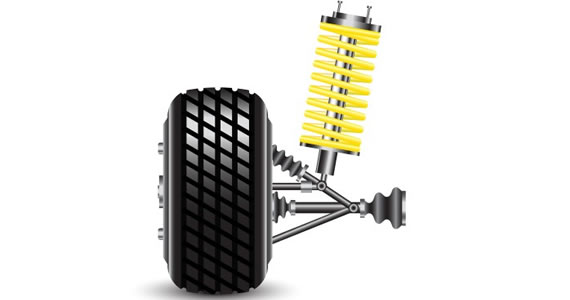
Shocks and struts are very similar to each other, and it can be tempting to think that they’re the same. They do the same job – a hydraulic piston is mounted within a framework that’s bolted to the vehicle above one of the four wheels. When your vehicle encounters a bump or dip, the piston extends or retracts in order to keep the vehicle level and reduce jarring/bouncing. However, while they do a similar job, they’re different components.

The main difference between the two is in the design of the component. Both shocks and struts can be found on the front or rear of the vehicle. Of the two, struts are more versatile, as they are actually structural components of the suspension system. Shocks, on the other hand, are more of a “bolt-on” solution for bounce control. As such, struts are generally more expensive than shocks and they can be used for more than just controlling spring motion – they can also be used as pivot points in the suspension and can take the place of other suspension components.

Springs

Springs are important components and work with both shocks and struts to control spring motion. You’ll find that buying a set of aftermarket springs gives you a set of four – two shorter springs for the rear and two longer ones for the front. There’s a very good reason for this. The front of the vehicle requires considerably stronger support and bounce control due to the weight of the engine and the effect of spring motion on steering. The rear of the vehicle, on the other hand, is very light (in comparison, of course), and does not require as much control or the same level of stability.

You’ll also find aftermarket coil over springs. These differ from OEM replacement springs in that they are designed to work in tandem with aftermarket shocks and struts to lower your vehicle. Coil over springs can provide substantial control, but you’ll sacrifice comfort when lowering your vehicle. Essentially, it reduces not only the height of the vehicle to the road, but the amount of travel in the strut/shock assemblies. The result is a “hard” suspension.

Considerations When Replacing Shocks, Struts and Springs

There will come a time when you need to replace your suspension components. Shocks and struts are both prone to wear damage. Eventually, the fluid seals that keep the hydraulic fluid within the chamber will wear out. This can lead to either a slow leak or immediate failure. Strut/shock failure should be immediately noticeable and usually presents as a “knocking” sound/feel when traveling over bumps and rough road surfaces.

When replacing your suspension components, it’s important to purchase items that are made for your specific vehicle. You’ll find a range of “universal” fit components out there, but these are really subpar solutions to your needs. Vehicle-specific components are designed with your vehicle in mind, which means they’re engineered to provide the best performance possible, while supporting your vehicle’s weight, providing steering control and offering a more comfortable ride.

Don Elfrink is the Owner and Operator of AutoMatStore.com where he specializes in selling custom floor mats. Prior to owning AutoMatStore, Elfrink worked in the automotive industry for over 30 years.

How The i3 and i8 Will Change the Game in Electric Cars

The Los Angeles Auto Show saw BMW unveil their latest i-series, the i3 Concept Coupe and the i8 Spyder Concept. Their i-series, like their 5, 6, 7 and X-drive series, is built around an overall concept of driving. Unlike any of their predecessors, the i-series is focused on electric motors. In a Forbes Magazine interview, Adrian Van Hooydonk, head of design at BMW, MINI and Rolls-Royce, was quoted as saying: “Our goal is to show that a premium brand can also be electric. We want to show that this new type of mobility can be fun.” BMW doesn’t just want to produce cars that are better for the environment; they want to enact a paradigm shift in electric cars.

The seeds of this change of attitudes toward electric cars have already been sown and can be seen in the used BMW market. As with many brands, used BMWs that are hybrids are resold for higher prices than traditional used cars. The used car market has put a premium on used BMW hybrids because it recognizes the value of hybrid cars as well as the importance of reducing one’s carbon footprint. The i-series is expected to have a similar higher used value in the future. So what makes them so special?

i3 Concept Coupe

A true electric car, the i3 offers drivers three different operation modes: Comfort, Eco Pro and Eco Pro +. These options determine the performance and range of the i3. In Comfort mode the range is expected to be around 100 miles with a 20 percent increase using Eco Pro, and a further increase with Eco Pro +. Among the many things that set the i3 apart are the materials that it uses. The cabin uses carbon fiber reinforced plastic that is lighter than steel yet stronger. This allows for an elimination of the B beam (the vertical truss in the middle) and a car much sturdier than most people expect from a plug-in electric. The drive train is made of aluminum while the inside is composed of leather, wool, wood and other renewable materials.

And it wouldn’t be a car of the future if it didn’t have cutting-edge technology. The i3 boasts two high-tech screens, one in front of the steering wheel and another in the middle of the dash. While the screens are nice, the real advancement is in the BMW I ConnectedDrive, which displays infotainment, navigation (showing you the range of the three drive modes as well), pull contacts, messages and schedules from a wirelessly connected smartphone that in turn makes suggestions as to where and when to recharge the i3.

i8 Spyder Concept

If you’re not ready for an all-electric car because you like the performance and power of a traditional car, the i8 is for you. With an estimated 78-mpg and a 0-60 time of 4.5 seconds, i8 delivers speed, drivability and lower carbon emissions. It has an electric plug-in motor in the front and a 1.5 liter 3 cylinder engine in the back producing a total output of 349 HP. It uses similar materials as the i3, making it lighter and stronger than traditional cars. Also, keeping with Hooydonk’s vision, it has futuristic styling that’s as fun to look at as it is to drive.

Side By Side: Nissan 370z vs Mitsubishi Lancer Evo

Gather round, sports car enthusiasts. Automakers have released their 2013 vehicle lines, and two Japan-based motor companies’ athletic coupes are turning heads on the road. Nissan’s latest release from its legendary Z line, the 370Z, continues the high performance legacy with pure speed and precise handling. Mitsubishi’s Lancer Evo blends under-the-hood excellence with day-to-day dependability to create a rare driving experience. These two go head-to-head in style and performance.

Look

Auto enthusiasts may see a resemblance to the classic Porsche 911 in Nissan’s newest 370Z. Slimmed down from its predecessor, the 350z (currently available through used Nissan dealers in AZ), the 370Z’s body exudes speed. This chic frame is mounted on 18-inch aluminum-alloy wheels and features LED daytime running lights along with traditional headlights. The Z’s cozy interior feels more like a cockpit than a driver’s seat. Contoured padding supports the ideal motion, whether you’re driving an automatic or a manual, and bright gauges help will help you keep hold of the reins.

By contrast, the 4-door Lancer Evo has a more square shape, providing space and convenience for its passengers within a stylish frame. It’s easy to spot a Lancer because of their trademark spoiler, which arches high above the car’s trunk. The body sits low to the ground on 18-inch alloy wheels, promoting road-hugging handling and smooth style.

Performance

Speed is the name of the game for these two bullet racers. The 370Z’s 3.7-liter, 7-speed engine generates 332 horsepower at 7,000 rpm and features the Variable Valve Event and Lift system, which reduces friction and improves performance. The Synchro Match function detects shifts in either direction and matches the speed accordingly, providing smooth accelerations and decelerations. To help drivers to harness this power, the 370Z is mounted on “high response” shock absorbers and anti-lock brakes. Add it all up, and the result is a car that goes zero to 60 in 4.7 seconds with impeccable handling.

Forged from the pits of rally racing circuits around the world, the Lancer Evo is a race car in disguise. Mitsubishi’s Super-All Wheel Control (S-AWC) affords drivers total control of the 291 horsepower, 2-liter turbo-charged engine. Experience four-wheel handling and a balanced torque split — ideal handling proportions. Lightweight, two-piece brake rotors and an upgraded suspension give you the potential to remain in control at break-neck speeds.

Utility

Nissan seems to have tailored every aspect to create the best driving experience around, but it sacrificed some utility in the process. The 370Z seats two and provides minimal cargo space, so it may not be ideal for families. At an EPA estimated 21 combined miles per gallon, this sporty coup holds its own in terms of gas mileage, so individual passengers can cruise through everyday life in style.

Part of the Lancer Evo’s allure is its versatility. As capable of racing the streets of Monaco as it is picking up groceries, this comfortable sedan will inject speed and style into day-to-day tasks. The Lancer Evo seats five and provides substantial trunk space.

Price

The 2013 Nissan 370Z Coupe starts at $33,120. Find a list of available add-ons on Nissan’s website, and the 2013 Mitsubishi Lancer Evo starts at $34,695. View additional features at Mitsubishi’s website.

For a closer look, check out the video below!

How to Flush Your Radiator on Your Own and Save Money

Your radiator is an essential part of your vehicle – it keeps the engine from overheating and also protects against freezing temperatures. However, just like every other vehicle system, your radiator needs to be properly maintained. While you won’t have to drain and fill your antifreeze with the same regularity you’ll need to change your engine oil, it does need to be flushed and filled periodically. There’s good news too; you can do this on your own very easily, and save both time and money.

When to Flush

As mentioned, flushing your radiator isn’t something you’ll need to do frequently, but it should be done on a regular basis. Most cars should have their radiator flushed and filled every five years or so. Older models should have more frequent flushes, particularly if there are signs of cooling system deterioration.

Watch What You’re Doing

Flushing and filling your radiator is good not only for keeping your cooling system in good shape, but for making sure it’s healthy as well. While the coolant drains out, keep an eye on it for signs of damage (white flakes, gunk and debris in large amounts can all be signs of impending doom).

What to Do

If you’re prepared to flush and fill your radiator, there are only a few simple steps you need to take. First, make sure you have the essentials:

  • Replacement coolant
  • A catch pan for the old coolant
  • A source of clean water
  • A funnel
  • Rubber gloves

Step 1:

Wait until the engine has cooled enough that the antifreeze will not burn you and the system is no longer pressurized. Open the radiator cap. Place the catch pan under the car.

Step 2:

Locate the drain cock under your radiator. Turning this opens the valve at the bottom of the radiator and allows the old coolant to drain out. Do not attempt this until the engine has cooled down. Make sure the catch pan is directly below the drain.

Step 3:

Open the drain cock and allow the coolant to drain out. Allow the car to sit for several minutes (it can take some time for the coolant to drain out).

Step 4:

Close the drain cock and fill the radiator with clean tap water. Fill the radiator until the water comes to the top of the opening in the radiator’s fill neck.

Step 5:

Crank your car (with the radiator cap off). Allow the car to run and warm up. Once the cooling fan cycles on, you know the thermostat has opened and water has flushed through the system. Turn the car off.

Step 6:

Drain the water from the radiator by opening the drain cock and draining the water/antifreeze mix into the catch pan.

Step 7:

This step can be omitted unless you purchased a chemical flush kit. Note that flush kits are really only recommended for high mileage engines with serious scaling in the radiator. If you have a kit, add the fluid and water now and repeat the above steps, following the directions on the can. Drain the mixture when done.

Step 8:

With the drain open (and the car off), add water to the radiator. It should flow through the system and out the drain, carrying with it any remaining antifreeze and debris. When the water turns clear, stop filling it and allow it all to drain out.

Step 9:

Close the drain and refill the radiator with clean antifreeze. When the radiator is full, start the car and allow the cooling fan to cycle on (signifying that the thermostat has opened and the system is cycling). Top off the coolant in the radiator and reservoir with your fresh antifreeze until it reaches the full mark. Check it with a hygrometer to make sure you have enough protection from freezing.

Don Elfrink is the owner and operator of AutoMatStore, an auto flooring company based out Columbia, Missouri. Before AutoMatStore, Elfrink was the operator of an automotive production site. AutoMatStore floor mats consist of customized logo, carpet, molded and all weather mats.