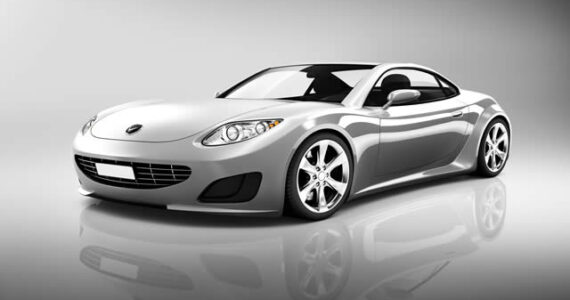
You love a beautiful car—but have you ever wondered why certain designs feel timeless while others look instantly dated? The answer lies in a rich, century-long story of cultural forces, engineering breakthroughs, and shifting consumer tastes. Automotive design has never evolved in isolation.
Each era’s most popular styles reflect what people valued most at the time: speed, freedom, prestige, practicality, or sustainability. Tracing those changes helps us understand not just cars, but the societies that built and drove them.
The Classic Era: 1920s–1940s
The earliest automobiles were little more than motorized carriages—functional, austere, and deliberately unpretentious. Henry Ford’s Model T, which sold approximately 15 million units between 1908 and 1927 (Shutterstock, 2016), set the template: sturdy, affordable, utilitarian. Aesthetics were secondary.
That changed rapidly through the 1920s. As paved road networks expanded across the United States, car bodies grew longer and lower. Designers drew inspiration from the Art Deco movement—bold geometric forms, flowing curves, and rich materials like chrome, aluminum, and polished steel.
Pearlescent paint finishes and elongated hoods became markers of sophistication. The Bugatti Type 57 SC Atlantic (1936), crafted from lightweight magnesium alloy with a distinctive dorsal fin running along its roofline, remains one of the most celebrated expressions of this era’s design ambition.
By the 1930s, a major engineering innovation transformed the industry: the monocoque chassis, a single-hull construction that made cars lighter, stronger, and more aerodynamically cohesive. Distinct features like headlights, fenders, and running boards began merging into unified body forms.
The teardrop silhouette—smooth, continuous, and organically shaped—dominated the decade and planted seeds that would influence car design for generations. The 1940s refined this further with Ponton styling, a design philosophy that blended all exterior elements into an uninterrupted surface, creating a muscular, streamlined effect that defined the postwar aesthetic.
The Golden Age: 1950s–1960s
Few design eras captured the public imagination quite like the postwar golden age of American automotive styling. Flush with prosperity and optimism, consumers wanted cars that made a statement—and manufacturers delivered with extraordinary boldness.
The tailfin defined the decade. Inspired by the twin tail rudders of the Lockheed P-38 Lightning fighter plane—a design connection traced directly to General Motors design chief Harley Earl, who arranged for his team to view the aircraft at a U.S. Army air base near Detroit in 1941—the fins first appeared on the 1948 Cadillac Series 62 (Klein, 2026). Their popularity was immediate and contagious.
By 1959, Cadillac tailfins reached heights of 45 inches, and the trend had spread to pickup trucks, station wagons, and even Soviet-built automobiles. As historian Witold Rybczynski notes in The Driving Machine: A Design History of the Car, "The tailfin had about as much to do with serious car design as a hula hoop. They were a fad"—but a fad that crystallized an era’s confidence and sense of limitless possibility (Klein, 2026).
The 1960s brought a counterforce. As Japanese and European imports flooded the U.S. market with compact, practical alternatives, American designers responded with a new category: the pony car.
The Ford Mustang and Chevrolet Camaro combined extended hoods, low-profile cabins, and affordable pricing into a package that felt both accessible and exciting. Metallic paints appeared for the first time, and muscle cars pushed horsepower and aggressive styling to new extremes.
Two design philosophies—American brawn and European economy—competed openly for consumers, and both left permanent marks on the global industry.
The Modern Classic Period: 1970s–1980s
Design doesn’t happen in a vacuum, and nothing proved that more dramatically than the oil embargo of the early 1970s. Overnight, the era of outsized fins and thirsty V8 engines gave way to an urgent demand for economy and efficiency.
Hard lines and sharp-edged profiles replaced organic curves. Compact models like the Ford Pinto and subcompacts from Japanese manufacturers surged in popularity, while the muscle car faded into cultural memory.
Color, oddly enough, thrived. Responding partly to Porsche’s bold decision to offer the 911 in 39 different hues, automakers experimented with vivid yellows, oranges, blues, and greens—alongside earthy browns and greens that reflected a growing ecological awareness (Shutterstock, 2016).
The 1980s arrived with a different kind of sobriety. Consumer priorities shifted toward safety and fuel economy, and exterior design often suffered for it. Boxy silhouettes and generic proportions characterized much of the decade’s output—the pursuit of aerodynamic efficiency without the artistry to make it beautiful.
The wedge-shaped sports car emerged as a rare exception. With aerodynamics now a genuine engineering discipline, designers began using wind tunnel data to shape exteriors more precisely. Interior ergonomics also received serious attention for the first time, as dashboards and seating became intentional design elements rather than afterthoughts.
Contemporary Design: 1990s–Present
The 1990s marked a deliberate break from the blandness that preceded it. Fluid curves and flowing contours staged a revival, particularly in performance vehicles. The Porsche 911 and Mazda Miata demonstrated that elegant, well-proportioned design could coexist with modern safety standards.
The wedge shapes and box sedans of the 1980s were phased out in favor of the kind of sculptural sophistication that recalled the best of the 1930s and 1960s.
The 2000s cemented the SUV as the era’s dominant form. The luxury segment, led by vehicles like the Range Rover Evoque and Lexus RX, reinterpreted the traditionally utilitarian SUV silhouette with swept rooflines, dramatic grilles, and premium interior materials.
White, silver, black, and gray became the overwhelming color choices of the era—reflecting a preference for understated sophistication over expressive individuality.
The most significant design shift of the contemporary era, however, is being driven by electrification. Electric vehicle platforms—built around flat battery packs housed in a skateboard-style chassis—eliminate the constraints that combustion engines imposed for over a century. Without a bulky engine block to accommodate, designers gain new freedom in proportions, hood height, and interior space.
As Ian Callum, former chief designer at Jaguar, observed: "By removing so many of the conventions inherent with internal combustion engine vehicles, the electric package provides us with a design freedom like never before" (Fully Charged Show, 2019). That freedom is already reshaping what cars look like.
According to the International Energy Agency’s Global EV Outlook 2026, electric car sales reached 4.2 million units and represented 28% of all new cars sold in Europe in 2025—a market signal that sustainable design language is no longer an experiment, but a permanent shift.
What Every Era Tells Us
Automotive design has always been a mirror. The chrome-laden excess of the 1950s reflected postwar confidence. The compact economy cars of the 1970s showed a society confronting its limits. The bold electric silhouettes emerging today speak to a generation redefining what progress means.
Understanding these eras does more than satisfy historical curiosity—it sharpens your eye for design, deepens your appreciation for craftsmanship, and connects the cars you see on the road to the world that produced them.
The next time you admire a tailfin on a vintage Cadillac or the seamless profile of a modern EV, you’re not just looking at a vehicle. You’re reading a chapter in one of design history’s most compelling stories.
- Klein, Christopher. "How 1950s Car Tailfins Took Inspiration From WWII Fighter Planes." History.com, June 15, 2026. https://www.history.com/articles/car-tailfins-automobiles
- International Energy Agency. "Trends in Electric Cars." Global EV Outlook 2026. IEA, 2026. https://www.iea.org/reports/global-ev-outlook-2026/trends-in-electric-cars
image credit: envato.com


 Gracie Hayden: Exactly, If we maintained our vehicle regularly, It will work properly...
 nathaliebieleu: This is one to get roadworthy and just drive and enjoy...
 James King: What if someone suffer from bad credit history?...
 Dorothy Catlett: I think, Parents should teach their kids by purchase a car with LOAN t...


