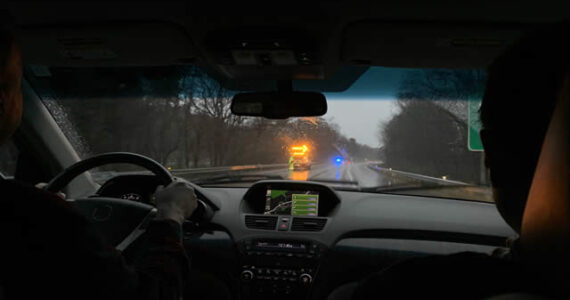
Your windshield does a lot more than keep the wind out of your face these days. Tucked behind that glass, tiny cameras and sensors are constantly watching the road, tracking lane markings, and scanning for obstacles ahead. These components are the eyes of your vehicle’s Advanced Driver Assistance Systems, or ADAS, and they play a direct role in keeping you and your family safe on every drive.
So when your windshield gets damaged and needs replacing, there’s an important extra step many car owners don’t know about: recalibration. Skipping it isn’t just a minor oversight. It can mean the difference between a lane-keeping system that gently nudges you back on track and one that simply doesn’t react when you need it most.
We know car repairs can feel overwhelming, especially when new terminology gets thrown into the mix. That’s why we want to walk you through what ADAS systems actually do, why recalibration matters so much after a windshield replacement, and what new state laws mean for you as a consumer. By the end, you’ll feel confident asking the right questions and making informed choices about your vehicle’s safety.
What Are ADAS Systems?
ADAS stands for Advanced Driver Assistance Systems, and chances are your car has at least one of them, even if you’ve never noticed. Common examples include lane-keeping assist, which gently steers you back when you drift out of your lane, automatic emergency braking, which can stop your car if it senses an imminent collision, and adaptive cruise control, which adjusts your speed based on surrounding traffic.
These systems depend heavily on cameras and sensors mounted on or near your windshield. Think of them as your car’s eyes, constantly reading lane lines, road signs, and nearby vehicles to make split-second decisions on your behalf.
For that information to be accurate, those cameras need to be aimed with remarkable precision. Even a fraction of a degree off can cause the system to misjudge distances or completely miss hazards.
This is where calibration comes in. Calibration is the process of fine-tuning these cameras and sensors so they’re aligned exactly as the manufacturer intended. It’s a bit like adjusting the focus on a pair of binoculars.
Get it right, and everything comes into sharp, reliable view. Get it wrong, and the picture becomes distorted, sometimes in ways you won’t notice until it’s too late.
Why Windshield Replacement Requires ADAS Recalibration
Here’s the part that catches many car owners off guard: replacing your windshield, even with a brand-new piece of glass, can throw off the alignment of your ADAS cameras. The mounting position might shift by just a millimeter, but that’s enough to send your car’s safety systems slightly off course.
Driving without proper recalibration means those systems might not function as intended. Lane-keeping assist could fail to detect lane markings correctly. Automatic emergency braking might not trigger when it should, or it could activate unnecessarily. Neither scenario is one you want to discover while you’re actually on the road.
There’s also a difference worth understanding between OEM (Original Equipment Manufacturer) glass and aftermarket glass. OEM glass is made to the exact specifications of your vehicle’s manufacturer, while aftermarket glass is produced by third-party companies and may vary slightly in thickness, curvature, or camera bracket placement.
These small differences can affect how reliably your ADAS systems recalibrate, which is why many technicians recommend OEM glass whenever possible, especially for vehicles that rely heavily on these safety features.
New State Disclosure Laws and What They Mean for You
As ADAS technology becomes standard in more vehicles, state legislatures are starting to catch up with consumer protection laws. New York, for example, has enacted legislation requiring auto glass shops to clearly inform customers whether their vehicle has ADAS features, whether recalibration is needed after a repair, and whether the shop is even equipped to perform that recalibration.
This kind of transparency matters because, without it, a car owner might drive away from a windshield replacement with no idea that a critical safety step was skipped entirely.
Other states, including Vermont and Massachusetts, are considering similar bills that would require auto glass companies to disclose this information upfront and address how recalibration costs interact with insurance deductibles.
For you as a consumer, these laws represent a meaningful shift. They mean you have the right to ask direct questions, and reputable shops should be ready and willing to answer them.
If your state hasn’t yet passed disclosure legislation, that doesn’t mean the responsibility goes away. It simply means you’ll need to be a bit more proactive about asking.
DIY vs. Professional Recalibration
It might be tempting to think, "I should be able to handle this on my own." After all, plenty of car maintenance tasks are perfectly reasonable to tackle in your driveway. ADAS recalibration isn’t one of them.
Proper recalibration requires specialized equipment, including calibration targets, precise measuring tools, and diagnostic software that can communicate with your vehicle’s onboard computer. Technicians also need specific training to interpret the readings correctly and confirm that every sensor is aligned to manufacturer standards.
Attempting this without the right tools or expertise carries real risk. An improperly calibrated system can create a false sense of security, where you believe your car’s safety features are working when they’re actually compromised.
There are also liability considerations. If an accident occurs and it’s later discovered that ADAS recalibration was skipped or performed incorrectly, that detail could affect insurance claims and legal responsibility.
What to Expect During ADAS Recalibration
Knowing what happens during recalibration can make the process feel far less intimidating. Most recalibrations fall into one of two categories: static calibration, performed in a controlled shop environment using specific target boards, or dynamic calibration, which requires driving the vehicle at certain speeds so the system can recalibrate itself in real-world conditions. Some vehicles require both.
The process typically takes anywhere from 30 minutes to a couple of hours, depending on your vehicle’s make and model. Costs can vary widely too, often ranging from $150 to $500, though this depends on your location, your vehicle, and whether static or dynamic calibration (or both) is required.
Many insurance policies now cover ADAS recalibration as part of a windshield replacement claim, so it’s worth checking with your provider before you’re caught off guard by the bill.
When you’re choosing an auto glass shop, don’t hesitate to ask a few key questions. Does my vehicle have ADAS features that require recalibration after this replacement? Can your shop perform that recalibration in-house, or will I need to visit a separate facility? Will you be using OEM or aftermarket glass, and how might that affect calibration? A shop that answers these questions clearly and confidently is one you can trust with your safety.
Drive with Confidence, Not Assumptions
ADAS recalibration isn’t an optional upgrade or an upsell to brush off. It’s a critical safety step that ensures the systems designed to protect you and your loved ones are actually working the way they should. As more states introduce disclosure laws, you’re gaining more power to ask informed questions and hold auto glass shops accountable.
The next time you need a windshield replacement, take a moment to ask about ADAS recalibration before the work begins. Choose a certified shop that takes this process seriously, and don’t be afraid to request documentation showing the calibration was completed successfully. Your safety on the road deserves nothing less.
- National Highway Traffic Safety Administration (NHTSA) – https://www.nhtsa.gov
Offers comprehensive information on Advanced Driver Assistance Systems (ADAS) and their role in vehicle safety. - Auto Glass Safety Council (AGSC) – https://www.agsc.org
Provides certifications, guidelines, and safety standards for auto glass repair and replacement professionals. - Society of Automotive Engineers (SAE) – https://www.sae.org
Discusses industry updates and advancements in vehicle technology, including ADAS calibration. - Your State Department of Transportation
Check local regulations and disclosure laws related to windshield replacement and ADAS recalibration in your area. - Trusted Certified Auto Glass Shops
Visit certified auto glass shops nearby that adhere to strict standards for both windshield replacements and ADAS recalibration.
image credit: envato.com


 Gracie Hayden: Exactly, If we maintained our vehicle regularly, It will work properly...
 nathaliebieleu: This is one to get roadworthy and just drive and enjoy...
 James King: What if someone suffer from bad credit history?...
 Dorothy Catlett: I think, Parents should teach their kids by purchase a car with LOAN t...


