Cars You Shouldn’t Buy That Have Bad Track Records

Getting a new car is exciting. Most people go into it full of anticipation about owning a comfortable and reliable vehicle. Unfortunately, many people end up getting the opposite: A new car that runs into problem after problem In some cases, these cars are even dangerous. Research can be time-consuming, though, so to help you get started, here’s a list of problem cars that you can cross off your list.

Dodge Grand Caravan

Despite its popularity with the family market, the Dodge Grand Caravan is well-known for having a tendency to break down. The brakes, suspension, and transmission are all infamously unreliable, making this one a model to stay far away from.

Volkswagon New Beetle

Yes, it’s cute, but it’s also destined for problems. The older models made before 2007 are particularly bad, but even the newer ones have a reputation for problems with brakes and climate control systems. Look elsewhere for the cute car of your dreams.

Audi Q5

You’d think a car this expensive would be guaranteed to be great, but that’s not the case. Introduced in 2009, the Audi Q5 is a crossover vehicle that looks fantastic but has become notorious with mechanics for having issues with both the cooling system and the power equipment.

Mini Cooper S

The turbocharged version of the Mini Cooper base model is popular with people looking for a small, stylish car with a lot of power. Unfortunately, the extra power comes at a price. Transmission and fuel systems are both fraught with problems, and that turbocharged engine itself is also an issue.

Jeep Grand Cherokee

Despite its rugged reputation, the Grand Cherokee isn’t as tough as it looks. The power windows are particularly likely to break, but major systems like the brakes and drive components are unreliable as well.

BMW 330i

This is another luxury model that just isn’t up to par. Since 2007 they’ve had problems with the fuel system as well as the body hardware and some engine components. Other models in BMW’s 3-series are certainly worth buying, but stay away from this one.

What to Do if You Get a Lemon

Avoiding cars with a bad history is a great first step, but even car buyers who do all the research can sometimes end up with a bad car. You should know that you have options if a problem car is costing you money. Many makers will replace the vehicle, but if they won’t make it right, you may have grounds for a lawsuit. In the worst situations, problems with crucial systems like the brakes can even be deadly. In that case, a lawyer should be your first stop. Specialized law firms are a good bet, but even general law firms will be able to tell you your rights and options.

Getting the wrong car doesn’t have to be a personal or financial disaster. To avoid problems, do your research, avoid notoriously bad models, and most of all, know your rights if you run into problems.


Savannah Coulsen is a freelance  writer. She lives in Raleigh. Savannah loves to read and write and she hopes to write a novel someday. Savannah also loves learning and is a self-proclaimed health guru. Savannah got information for this post from car accident attorneys Stewart, Humpherys, Molin, & Griffith.

Shop Talk – 5 Tips for When You are Fixing Your Vehicle

Are you pretty handy in the garage? Fixing your own vehicle is the number one way to reduce the cost of automobile ownership. If you have the means to go about this project you should consider doing it right. Shop labor is expensive, while your own labor is as free as your time. If you have the ability and means to repair your own vehicle here are five suggestions to consider as you undertake this feat.

Safety First

Before you get to work, make sure you have the equipment for a safe repair. If you’re working under the car, you need to keep the car from rolling. You can buy blocks made for this, or use large pieces of wood. Next, if the car needs to be jacked up, use jack stands—don’t trust a hydraulic jack to hold a car while you’re under it. Finally, if you’ll be working with solvents or other chemicals, make sure your work area is well ventilated. Working on a car can be very dangerous and should be done with care.

Buy a Repair Manual

Although you may have done hundreds of car repairs, it’s always a good idea to buy either the service manual for your car or one of the reputable third-party manuals. With a manual, you can read through the repair process before starting and prepare for more complicated procedures. Many repairs are similar between vehicles, but they’re not exactly the same and so buying the manual can make a huge difference.

Stay Organized

Have a few plastic containers around to hold the bolts, nuts and other small parts you collect when repairing your vehicle. You can even buy magnetic trays to hold metal parts so you won’t lose them if a container is knocked over. Pull all the tools you’ll need out of your toolbox before you start, you might lose your concentration and make a mistake if you stop in the middle of a repair to locate a specific tool.

Don’t Take Shortcuts and Use the Correct Tools

Taking shortcuts can damage parts on your car, even you can even hurt yourself. If a repair procedure says you need to remove a part a certain way, follow it. If you try to force parts out you can damage them or other parts of the car. If you don’t have the specialized tool for a certain repair, check the local auto parts stores—they’ll often lend or rent you the right tool for the job.

Know When to Take the Repair to a Professional

If you have a well-stocked garage full of tools, a manual and mechanical aptitude you can repair many things on your car. But, if you’re not confident about a certain repair, take it to a professional. They have diagnostic equipment and can even purchase parts online from older vehicles like some Subaru SVX parts for a cheaper alternative to buying brand new parts.

With these tips in mind you can be sure to save some money and feel a sense of satisfaction after managing the repairs by yourself. If done correctly, this method can be a great hobby and passion as it is for many people.

Driving on the Dime: World’s Most Expensive Roadways

Every day, all over the world, drivers make extensive use of roadways and other transport infrastructures without considering the at time enormous costs that went into building these roads. Not all roads are built equal, however, and some have earned more consideration than others based on the sheer resources that went into their construction. In this article, we will be highlighting some of the most costly roadways in the world.

Oresund Bridge, Denmark-Sweden

At a cost of 30.1 billion krones (roughly 5.7 billion US dollars), many civil engineers count the Oresund Bridge and Road Complex the world’s most expensive roadway, even though most of its cost went into building the bridge itself. Completed in 2010, the Oresund Bridge effectively connects Denmark and Sweden across the Oresund Strait, and measures a total of 7845 meters, making it the longest road and rail bridge system in Europe. The Oresund Bridge received an International Association for Bridge and Structural Engineering award for Outstanding Structure engineering in 2002.

Marina Coastal Expressway, Singapore

Singapore’s tenth and most expensive expressway, the Marina Coastal Expressway was completed on the 28th December, 2013, at the cost of 4.3 billion Singapore Dollars (US $3.4 billion). Although only 3 miles long, the roadway is particularly broad for a road in Singapore, at a breadth of five lanes, and stretches over a particularly difficult coastal area. Construction even involved undersea dredging to avoid conflicts with Singapore’s many canals, as contract engineers working on other highways experienced.

Tehran-Shomal Freeway, Iran

A freeway currently partially complete, the Tehran-Shomal (literally, "Tehran North") freeway is undergoing extensive renovations and extensions, costing 452 billion rial ($1.7 US) to complete. The roadway connects the city of Tehran to a number of locations in Western Mazandarin, enabling crucial economic opportunities for the rural populations there. Currently, roughly half of the 75 mile freeway is open for commuters, with construction of the other half being stalled due to complications with contractors.

As these roadways show, cost doesn’t always equate to size when it comes to roadways. Oftentimes, outside circumstances, as well as the difficulty of the terrain, have a far greater effect on the total cost of the roadways. So next time you’re driving along a highway, spend a moment considering just how difficult, expensive, and monumental an achievement developing such a structure is and how many people it took to get it all done.

“Brooke Chaplan is a freelance writer and blogger. After graduating from the University of New Mexico she moved to Los Lunas where she now lives and works. She used the New Jersey Institute of Technology online civil engineering degrees for her research into this article. Contact her via Twitter @BrookeChaplan.”

New or Used: What’s Your Best Option for a First Car?

When it comes time to buy a first car, many people are unsure about which type to choose, new or used. Both have their own specific benefits and drawbacks. Below you will find some helpful ideas to make the decision easier.

Used Cars Get a Bad Rep

When someone says they are going to get a used car, what image comes to mind? Years ago the image of a used car was one of a junker. A used car was something that would need constant repair. Fortunately that is no longer necessarily the case. Nowadays people lease cars for two or three years and then get a new car. That three-year-old car is technically a used car, but there is nothing wrong with it. In the old days people kept their car for 20 years and then sold it. Those were used cars that needed lots of work. Many people buy used cars or lease them. These cars are much cheaper than brand new cars, and if you choose to get a used car that has just come off of lease then it is only going to be a few years old.

Benefits of New Cars

A new car is always exciting. They have that amazing new car smell, and they will have almost none of the mechanical problems that you find in older cars. They also look really nice. There is nothing better than a nice shiny paint job. The downside of a new car is that it will cost you a lot more. You can expect to pay a lot more for a car that is just out of the factory.

Which One is the Best Choice For a First Car?

The best option for a first car would be a used car that is only three or four years old. You can visit a brand name dealership and see their inventory. You could lease a three-year-old pre-owned name brand car at a dealership for less than two hundred a month. These cars have low mileage and are much cheaper than buying a brand new car. One of the best ways to get a good used car is to visit a dealership. This is a better method than contacting a private seller. The dealership will have an inventory of quality used cars. You will not have to wade through old junk cars that are not safe.

For your first car, it’s always a good idea to go a bit newer if possible to save on those inevitable repairs. Used cars will get you a good investment for a lot less and will help to set you up with a reasonable monthly payment.

“Brooke Chaplan is a freelance writer and blogger. She lives and works in her home in Los Lunas, New Mexico. After graduating form the University of New Mexico she has enjoyed writing and researching articles when she isn’t outside running or biking. Premier Mazda was a great resource for writing this article. Contact Brooke via Twitter @BrookeChaplan.”

Simple Advice To Help Avoid Getting In A Car Accident

Car accidents happen to the best of drivers but everyone can be proactive and take measures to be safe on the roads. More often than not, drivers who experience a car accident look back upon the situation and think of things that they wish they had done differently. Even the most experienced drivers who have accidents due to no fault of their own still have the capacity to improve their driving habits. Follow the simple pieces of advice outlined below to avoid accidents.

Stay Alert

Always keep your eyes on the road and the surrounding vehicles, whether it is the road immediately ahead of your or the road as seen in the rearview and side mirrors. Don’t let yourself get distracted by passengers in the car, objects that you pass by or your car stereo. Keep your hands on the steering wheel in the direction of a clock that has its hands pointed at ten and two. This way you will be able to properly control the vehicle in case you have to steer out of harm’s way. If you drink alcohol, sober up before getting behind the wheel.

Don’t Multitask

If your vehicle is equipped with steering wheel audio controls, use those instead of the nozzles on the center console. It is much easier to move your thumbs a few inches up and down instead of moving your entire arm to the right to hit the volume knob or to change the radio station. By using the steering wheel buttons you’ll be able to keep your eyes and your entire focus on the road instead of looking over at the stereo knobs.

Optimal Vision

A clear line of vision is essential to avoiding accidents. Always clean off your windshield and mirrors, especially during the winter months. Don’t rush off to work or another event with snow and ice still stuck on these surfaces. They’ll impede your vision. If you experience a problem with your windshield and rear window defrost controls, immediately take the vehicle in for repairs.

Regular Upkeep

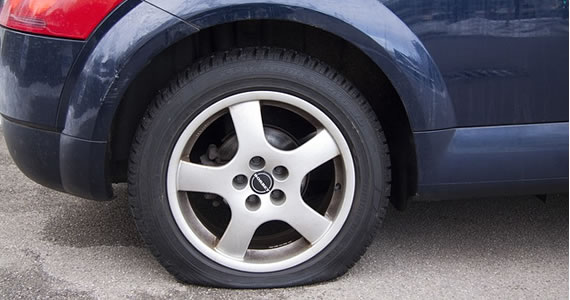
Make sure that your car is regularly maintained by a professional mechanic to ensure that it operates as it should. Also, keep your tires inflated to the optimal pressure level to avoid a flat tire that could cause you to lose control of the vehicle.

Obey Speed Limits

Many accidents are caused by drivers who disregard speed limits and drive either too fast or too slow. Drivers should keep their eyes peeled for speed limit signs on all unfamiliar roads. Always leave early for work and other appointments so that you don’t have to rush to get there.

Take a Defensive Driving Course

The majority of drivers lose track of defensive driving techniques as they age. Take a defensive driving course to refresh your driving skills, awareness and strategies to avoid accidents and tickets. Most automobile insurers will offer discounts to customers who complete a defensive driving course.

Savannah Coulsen is a freelance  writer. She lives in Raleigh. Savannah loves to read and write and she hopes to write a novel someday. Savannah also loves learning and is a self-proclaimed health guru. Savannah found information for this article from DUI Attorney Michael P. Jones.