All posts in On the Road

The Open Road: 4 Things You Probably Didn’t Know About Truck Drivers

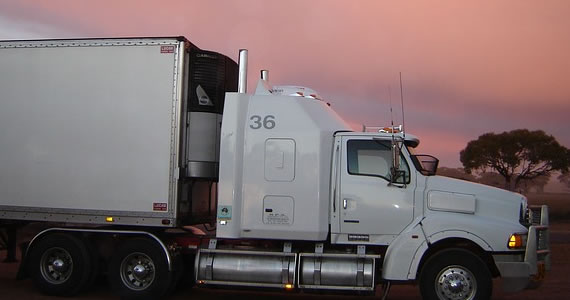
You might think that in our day and age, everything is done electronically, however, there are still needs for old-school methods of transportation. Truck driving is still a thriving occupation that is necessary in our highly advanced world today. Truck drivers are often seen as an inconvenience on the road for those who are trying to get somewhere quickly without getting stuck behind a big rig. Although truck drivers are known for spending hundreds of miles on the road daily, there are some surprising facts that the general public has yet to learn. Read on for some surprising facts about truck drivers that you might not know.

They Spend Over 100,000 Miles on the Road Annually

Truck drivers have one of the most interesting occupations and are estimated to spend 125,000 miles on the road each year. This makes for several hours listening to the radio or staying deep in thought while working to stay safe when making a delivery. Legally, they are only able to spend 11 hours on the road each day to prevent fatigue and keep them (and others on the road) safe.

Truck Drivers are at Least 21 Years of Age

Although the legal age to drive a vehicle in the U.S. is 16 years of age, truck drivers are required to be at least 21 years old before becoming a truck driver. Local companies may hire someone under 21, but reputable trucking companies require employees to have a CDL license for cross-country driving. This license requires individuals to be at least 21 years of age. Also to obtain the proper licenses, there is a certain amount of schooling and training needed. The schooling is not universal either, it depends on what country and region you’ll be driving in.

Their Income Continues to Increase

In some parts of society, truck drivers are often viewed as a low-paid individual with a tedious job. In previous years, their salaries averaged $35,000 annually but now are in the $55,000 range due to the increasing dependency of transporting goods. Truck drivers are often paid per mile or depending on the load that they transport, meaning they are not paid while the truck is idling or during a delivery.

Truck Drivers Often Work 70 Hours a Week

For many truck drivers, they can drive up to 70 hours per week in an eight-day period, but legally must take 34 hours off to relax and rest until they hit the road again. Each day, they must have at least a 10-hour break to ensure that they are in a healthy state of mind to stay alert when behind the wheel. Obviously these regulations have been put in place in order to keep everyone on the road safe, and make sure that drivers don’t overdo it and cause an accident.

America’s fascination with truck drivers began in the 1960s and ’70s when new films like Convoy and Smokey and the Bandit became blockbuster hits. Today, the occupation continues to evolve to reward the drivers with more benefits and luxurious amenities inside of the cab. Although there are several challenges when traveling hundreds of miles each day, the benefits continue to make it an enjoyable career.

AUTHOR BIO: This article was written by Dixie Somers, a freelance writer who loves to write about business, finance, women’s interests, and technology. She lives in Arizona with her husband and three beautiful daughters. Dixie got her information for this article from the professionals of Surrey & Hampshire LGV Training in London who specialize in training and certifying truck drivers.

Roadside Smarts: How to Prepare New Drivers for a Flat Tire

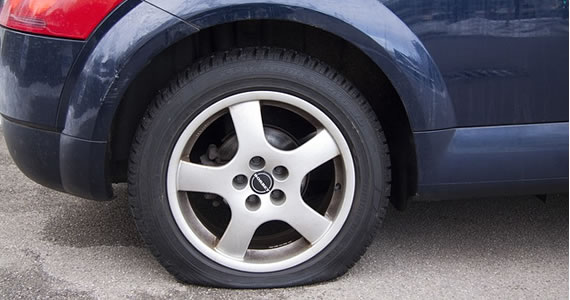
A flat tire is one of the most common problems on the road. New drivers should be prepared to deal with the following situations involving a loss of air pressure in the tires. Don’t leave a new driver without these instructions to help them if the worst should happen.

Measuring Tire Pressure

Modern cars are equipped with tire pressure monitoring systems. Such digital technology automatically alerts when the gauge pressure in any tire drops below normal. A flat tire signal light may come on in the dashboard or central console. However, such a warning doesn’t always imply that there is a flat tire. Drivers should be able to use manual gauges to measure the gauge pressure of each tire. As long as the tire gauge pressure is above 25 psi, it’s still safe to drive.

Inflation

A driver may be able to inflate a tire that has lost a few PSI in gauge pressure. Simple battery powered air pumps can be used to inflate a car tire back to normal condition. Such pumps can also be connected directly to the battery pack under the hood. A tire may not always go flat right away. For example, a screw or nail may gradually reduce the internal pressure of a tire. It might take several hours for a tire to completely lose all of its air through small punctures. Keep a sharp eye on all your tires throughout the week.

Quick Patchwork

A deflated tire could be fixed without any roadside assistance. A relatively small screw or nail can be removed from the tire tread with pliers. A hole that’s not too deep may be patched with tire sealant that’s available in aerosol cans. After the patching, the entire tire can be inflated to the proper gauge pressure. When inflating a completely deflated tire, it’s important to use a jack to balance the vehicle when above the ground.

Roadside Assistance

Changing a tire might be out of the comfort level of new drivers. Roadside assistance can quickly remove a deflated tire and install a spare tire. However, a spare tire could only last for a few dozen miles. During a flat tire problem, a towing service may be needed to bring a car back home. Drivers should be equipped with the right phone numbers to call and the specific instructions for what to do in each situation.

Drivers can take different steps to handle a flat tire without any assistance. It is always a good idea to prepare new drivers with the basics on how to care for a car and it’s tires. With the right instructions, any new driver can get ready for any kind of emergency situation.

Article Credit: supplied by Milwaukee OWI law firm

Hollywood Hogs: Five of the Greatest Motorcycles in the Movies

Ever since Peter Fonda and Dennis Hopper jumped on their Harleys in 1969’s Easy Rider, the motorcycle has been an icon of American cinema, albeit featured more prominently in action blockbusters than character driven road trips. Here’s five of the coolest bikes.

Terminator 2: Judgment Day (1991)

hollyterminator

Within minutes of arriving from the future, Arnold Schwarzenegger’s Terminator commandeers a 1990 Harley Davidson Fat Boy, whisking John Connor away from the clutches of the shape-shifting T-1000 and leading him on a thrilling urban chase through L.A. At one point, the Terminator jumps the 650 pound bike down into a storm drain, throwing off sparks as it lands. This stunt, performed by Peter Kent, was accomplished by using wires to suspend the bike. The wires were then digitally removed in post production.

X-Men Origins: Wolverine (2009)

hollywolverine

While probably not at the top of anyone’s list of favorite movies, this franchise spin-off nevertheless features a fantastic early action set piece where our hero, played by Hugh Jackman, manages to jump his 1963 Harley Davidson Duo Glide into a helicopter.

The Dark Knight (2008) and The Dark Knight Rises (2012)

hollydark

Ever since it burst out of the battered shell of Bruce Wayne’s jet black Tumbler, the BatPod has captivated audiences as a crucial piece of machinery for the Caped Crusader in Christopher Nolan’s Batman trilogy. Custom built for the film by Nolan and designer Nathan Crowley, the BatPod’s engines are actually mounted inside the wheels instead of on the frame, and the driver must actually lean his entire body to steer it.

The Matrix Reloaded (2003)

hollymatrix

The Wachowski Brothers’ Matrix trilogy is wall to wall with great action scenes, but perhaps none more hair-raising than when Trinity (Carrie-Anne Moss) turns her 2001 Ducati 996 around on a busy highway and races against the flow of traffic. Known for its speed and maneuverability, the 996 is the perfect bike for Trinity to evade her pursuers as she dips and weaves between minivans and tractor trailers.

The World’s Fastest Indian (2005)

hollyindian

In this incredible true story, New Zealand native Burt Monro (Anthony Hopkins) races his custom built 1920 Indian Scout to a land speed record of 190 mph. Indian, founded in 1901, made the first motorcycles in America, and the Scout’s polished, torpedo shaped hull give it a look unlike any other bike in film.

Informational credit to Immix Racing motorcycle racks who provide everything from skid plates to a Yamaha wr250r rack.

How to keep it Cool When Teaching Your Teen to Drive

The adolescent years can be a trying and life altering time for parents. One of the biggest changes and life moments comes when it is time to teach your young teen how to drive. This can be a time-exhaustive experience as you will need to have your teen practice how to drive and prepare mentally for their driving test. Here are some steps to keep it cool when teaching your teen to drive.

Show Them How a Car Works

One of the first lessons is to show how a car works. Open up the hood and show them how the engine works and what to check when there is an issue, such as fluid levels. Show them what every button and light on the dashboard panels mean. Show them what turns on the wipers, wiper fluid, turn signals, climate control, and hazard lights. Go through the car manual to tell your teenage what alerts could mean. Show them how to position their seats, position the rear view mirrors. Finally, you can show them what to do in emergencies, such as how to change a tire and what to have packed in the car, like flashlights.

Train Yourself to Speak Calmly

For many parents, their teens learning how to drive may seem like a catastrophe ready to happen. But, like anything in life, the teenager has to learn in order to mature. Before driving, you need to tell yourself that as a parent you are there to provide information and to allow the teenager to learn and experience what driving is like. Having a rough, authoritative tone or yelling in a panic or anxious voice that they are doing something wrong will not help the teenager and could make the experience more stressful for the two of you. Its better to talk calmly to the teenager and to inquire with them why specific driving techniques are necessary. This will help the teenager learn calmly and, as a result, make the learning experience more pleasant than stressful. 

Use Isolated Areas to Drive

The very first experiences of driving can be done at empty parking lots. Try to use non-private property lots as you could be trespassing. But, try to use a lot where there are little to no parked cars. This is the field that works best to learn how to drive. Let your teen be in the driver seat and tell him or her to accelerate and stop. Tell them to only drive 10 to 15 mph in the parking lot and see how fast they can stop when you command them. This hones their senses so they can stop quickly in case of an emergency. Eventually, the empty parking lots will become excellent grounds to learn how to reverse and park. Since these lots are empty, they prove to be excellent, stress-free training grounds. 

It is highly recommended that the first actual driving exercises are done on non-congested back roads. If you send the teen out to major roads, the teen may become very anxious from traffic and frequent stopping. The basics of driving the speed limit, with the road, and mastering different kinds of weather (rain, snow, etc) will work better on back roads than major routes. This will allow you and your teen to stay calm. 

Set Rules

Before the teen is ready to take driver school classes, it’s very important at the very beginning to establish the future rules of driving. This talk should include telling the teenager to follow state laws in terms of driving curfews and passengers in the car for teen drivers as well as your household’s rules. This is important to establish during the teaching days before drivers ed so the teenager knows full well what the rules of the household will be related to driving. Having this talk later will cause deep conflict and possible rebelliousness. But, if you discuss calmly the concerns and rules placed by you to your teenager, they may be more accepting that this will be the reality of driving life after they get their license.

Author Bio: Annette Hazard is a freelance writer and small business owner. She is a mother or one and wrote about health and family when she gets the chance. She suggests telling your kids there will be rules and consequences after you have your license.

The Six Greatest Off-Roading Vehicles of All Time

Off-road driving is by far one of the most exhilarating experiences you can have behind the wheel. Everyone is used to driving their vehicle on city streets and freeways—having the ability to drive your vehicle across all sorts of different terrain appeals to adventure lovers everywhere. For those who hear the call of rocky terrain and wide open spaces, there are plenty of excellent off-roading vehicles to choose from:

Ram 1500

4-wheel-drive trucks can be some of the best vehicles for off-roading. The Ram 1500 is no exception. It has a powerful V8 engine and it’s what comes to mind when people think of an American pick-up truck. Sturdy, bulky, and packing quite the punch with its up to 395 horsepower, the Ram 1500 will more than satisfy all of your off-roading needs.

Jeep Wrangler Rubicon

The Jeep brand has become synonymous with off-roading. You could pick just about any Jeep you want and it would be a great off-roading vehicle. However, the Jeep Wrangler Rubicon is the quintessential off-roading Jeep. The Jeep Wrangler Rubicon has lockable front and back differential, making it an adaptable vehicle with a great 4-wheel-drive option. When it comes to off-roading, just about any Jeep will suit you just fine. The Rubicon, however, has the look and the performance that makes it ideal for driving on alternate terrain.

Subaru Outback

The Subaru Outback isn’t just a great family car; it’s also an excellent off-roading vehicle. Subaru is known for having many years of success in the rally circuit. The Outback shows that Subaru has a good idea for what makes an off-roading vehicle work. The Outback has great clearance and a symmetrical all-wheel-drive system.

Chevy Silverado Z71

The Chevy Silverado Z71 is another pick-up truck that has become a fan favorite when it comes to off-roading. This is a special model of the popular Silverado line designed specifically for off-roading. With excellent off-road suspension, easy handling, and excellent performance in low gear, the Silverado is one of the best pick-ups for off-roading.

Hummer H1

The Hummer H1 is a powerhouse. While you may not see a lot of them on the street anymore, they are still great SUVs for off-roading. With extremely high ground clearance, huge tires, the Hummer H1 can handle just about any terrain you throw at it. For this reason, the H1 has become a favorite of the American military, widely used to transport soldiers and supplies across the harshest terrain.

Toyota Land Cruiser

The Land Cruiser is the go-to off-roading vehicle in parts of the Middle East and Africa. Toyota installed crawl control which uses a computer to adjust speed so that the driver can focus on steering. According to an Edmonton truck parts expert, the Land Cruiser is the most durable and cost-effective off-roading vehicle on the market.

All in all, there are many different off-roading vehicles to choose from. What you use for your all-terrain adventures depends on you, but for the best experience with your vehicle, one of those listed above will always be a great choice. Whether it’s a car, truck, or SUV, these are the unquestionably the best off-roading vehicles to grace the world.

Informational Credit to Tonka 4-Wheel Drive Ltd