All posts in On the Road

Drunk Driving Statistics and What’s Changing on the Roads Today

Although drunk driving has decreased in recent years, it remains a serious problem in our country. During the average hour, about 30 people suffer injuries caused by intoxicated drivers. According to Mothers Against Drunk Driving such accidents killed 10,076 Americans in 2013. Various estimates indicate that these crashes cost the nation $60 to $200 billion per year. About 2.3 percent of the victims are children under 15 years old.

Improvements

The good news is that fatalities have decreased by more than 50 percent since 1980. Government figures show that the number of people killed in 2013 was about 250 less than the statistic for 2012. While alcohol continues to play a role in about 29 percent of highway deaths, this compares well with rates reported during the 1960s and 1970s. Intoxication caused about three out of five fatalities in that time period.

Enforcement

State and local authorities have become more serious about enforcing drunk driving laws. Gone are the days when police would ignore all but the most serious cases of driver intoxication. Stricter laws and sobriety checkpoints have also made a difference. For example, KOMO-TV reported that three counties in Washington State introduced new laws during 2014. Drunk drivers with multiple convictions must undergo daily alcohol tests.

Awareness

Shifting attitudes and greater awareness of the problem have helped to reduce intoxicated driving as well. Media outlets and schools across the nation regularly educate the public about the risks associated with this dangerous behavior. Public service messages on radio and TV often starkly illustrate the consequences. More people realize that it’s a crime with serious medical, legal, and financial repercussions.

Safety

General improvements in highway safety are also helping to decrease fatalities and injuries. Cars have become safer in recent years, and most vehicles on today’s roads feature multiple air bags. Additional exterior lights make modern vehicles more visible to other drivers and pedestrians. Increasing numbers of cars now incorporate backup cameras. As a recent Star Tribune news article pointed out, emergency personnel are responding to accidents more quickly as well.

It’s appropriate to celebrate this progress, but more needs to be done. About six Americans die in traffic accidents involving alcoholic beverages every four hours, according to the Bureau of Transportation Statistics. This is still far too many. Even if you don’t drink or own a car, you can help solve this problem by discouraging others from driving intoxicated.

If you become involved in an alcohol-related collision, be sure to seek the assistance of a Blumenauer Hackworth lawyer.
Five Things You Should Really Be Worried About on Your Driving Test: Part II

On the day of your driver’s test, you may have jangled nerves and butterflies in your stomach. Feeling nervous is completely normal, and you will probably do just fine, as long as you are thoroughly prepared. Here are some pointers for the day of the test, and what you should focus most your studies on.

Know the Manual

Seems obvious, right? But you would be surprised at how many people only leaf through the testing manual once, or don’t read it at all. Study for ten minutes per day from the first day you know you have a driving test scheduled. It helps to have a family member or friend quiz you from the test booklet. When you are a passenger, pay attention to real life examples of things you have learned from your studying.

Take it Easy

Take the time you need to parallel park. Don’t rush through anything during the test. It’s not a race after all. While driving, when you need to step on the brake, be confident. Don’t stomp on the brake unless it is an emergency. Anticipate stops in advance, and gently stop the car. Slow down for curves as well. You don’t want the instructor seeing you make a sloppy curve. When accelerating from a stop, start slowly by applying gentle pressure to the gas pedal.

Intersections

Never change lanes in the middle of an intersection. Not only is this dangerous, but in some states it is illegal. While it may be tempting to do a lane switch in an intersection, your instructor will frown on this, and may use it against you during test scoring. 

Obey the Rules of the Road, with Confidence

Always follow other cars at a safe distance. If somebody is following you too closely, and you are concerned for your safety and the safety of your driver, it’s advisable to gently slow down to allow more space between you and the car ahead of you. North Shore Driving School Ltd says it’s always better to use turn signals too much, rather than too little. Make sure you’re using your turn signal for turns, changing lanes, and parallel parking. Also, never ask your instructor for advice. The instructor needs to know that you will be competent to handle the open road on your own. Stay calm, and confident, and only ask questions you know might not be in the manual.

Passing your drivers’ exam can be a nerve-wracking, but ultimately rewarding experience. The excitement of driving on your own can be exhilarating. Creating a good foundation of driving habits at a good Burnaby driving school will help keep you and other drivers safe now, and for a lifetime.

Motorcycle Tips for a First Time Rider

Anyone who rides a motorcycle will tell you, this is one of the most freeing ways of getting around. Whether you’re just getting one for recreation, or everyday use, motorcycles provide a sense of adventure you just can’t get trapped in a car. However, riding can be a bit intimidating for first timers. Thankfully, there are some tips which will make this whole experience much easier for your first time on the back of the bike.

Sharpen Your Skills

In order to really get a grasp for riding, it is best to sign up for some type of motorcycle riding course. There are all different kinds offered all over the nation to help you become a pro behind the handlebars. A course will teach you all the basics of riding a motorcycle, as well as any advanced techniques you may need to know. While some classes may cost upwards of $350, there are some that are free.

According to Bronson Jones & Co car accident lawyers in Vancouver, if you take one of these courses, you may even be eligible for some kind of insurance discount so it is definitely worth a look into. After all, the last thing you want is to be dealing with a car accident lawyer for something that could have been prevented.

Always Stay Protected

It is crucial you wear a helmet at all times when out riding. If you don’t, you are putting yourself at high risk for a potentially fatal accident. In fact, in many states it is illegal to operate one without a helmet, which means if you don’t wear one, you could be facing many tickets and penalties. It’s always better to be safe than sorry so make sure you’re fully protected.

Dress Appropriately

When you’re riding your motorcycle, you want to be wearing the right attire. Wear heavier clothing, and sturdy shoes whenever you go out as well. That of course includes a leather jacket, gloves, full pants, and footwear that goes over the ankles. These items are crucial because you want to wear clothes that will protect you from all that will be thrown your way like the wind, bugs and debris. There are even some clothes that are specifically designed for motorcycle riders.

Learning to ride a motorcycle can be tough, but it doesn’t have to be when you’re told the right steps. With these tips in mind, you’ll be fully prepared to take on whatever comes your way when out on the road.

Off the Road: Make Sure You’re Ready for Your Driving Test

Taking a driving test (also known as a "road test") and earning a driver’s license is easily one of the most relatable experiences in a person’s life. For some, it’s a rite of passage. To others, it’s a necessary career step or job requirement. You might be a teenager looking for more freedom, or a driver for a corporation that needs to upgrade to a commercial driver’s license. Either way, there are some pitfalls to watch out for.

Doing Your Homework

While the difficulty of your driving test may depend on the strictness of the administrator (or even their mood), it is absolutely necessary to know the laws in your state or place of residence. Study your local driver’s manual thoroughly. Most driver’s manuals also contain information related to actually earning a driver’s license, so take the opportunity to familiarize yourself with the process as well.

Getting Behind the Wheel

Going straight from earning your learner’s permit (or local equivalent) to taking your driving test is not advisable; you don’t want your first time behind the wheel to be the day of your driving test. Driving can require acclimation, so make sure to get a suitable amount of practice in a vehicle you’re comfortable with driving prior to taking your driving test. Doing so near the place where your test will be administered, and getting the lay of the land (and roads) can provide a worthwhile advantage as well.

Restoring Your Driving Privilege

A driver’s license can be suspended for any number of reasons, including the health concerns of the driver, and criminal offenses. In this case, the driver will need to go through a unique process that addresses their specific situation. Acquiring the help of a professional can be extremely helpful in these circumstances. For example: in the state of Pennsylvania, being convicted of underage drinking will result in one’s driving privilege being suspended at least until they turn twenty-one. A DUI conviction will yield similar consequences. With the professional help of a Newmarket lawyer, however, completion of a rehab program can make expungement a possibility.

Successfully completing a driving test can be tricky business. It requires careful preparation in the form of lots of studying and practice. Earning your driver’s license back once it is suspended is even more difficult and (usually) more complicated. Nevertheless, with a little bit of perseverance, most anyone capable of driving safely will be able to hit the road.

Four Incredible Cars That You Can Be Paid To Drive

Driving is fun. Strap on the safety belt, rev the engine, and off you go. But then reality hits and the gas gauge is nearing empty, the insurance is due, and there’s a sound coming from the engine that can’t possibly be good. As fun as it is, regular driving can really cost you. If you love nothing more than the feeling of being behind the wheel, you should consider a career path which will both put you in a great car and pay you to drive it!

Race Cars

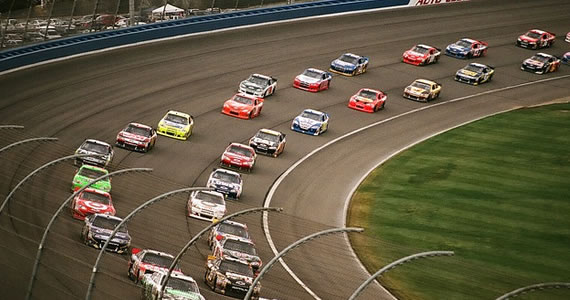
Drag racers, stock car racers, even dirt track racers at the track on Saturday night get to drive competitively at breakneck speeds. All those stickers covering race cars aren’t free—sponsors pay the race team to advertise their name on the side of the car so spectators see the product. The better the driver, the more the sponsors pay to have their name go around and around on that particular car.

Fire Truck

At some point, it’s every kid’s dream to get in the driver’s seat of a big, usually red fire truck and blare the sirens.  As a firefighter, you could get the opportunity to not only drive this amazing firefighting vehicle, but use it to help the public and save lives. With other motorists yielding to the siren and the ability to manipulate street lights, you couldn’t ask for a better driving experience.

Police Vehicles

Police patrol cars have all the bells, whistles, switches and goodies. The officer behind the wheel gets respect when cruising down the road. Even the slickest, fastest sports car will hit the brakes when they catch a glimpse of a squad car. Police vehicles are a special breed—with lower, tighter suspension and beefed-up engines, these brutes reach top speeds and can command just as much attention as fire trucks. If you think you can handle the rigors of police work, a recruiter with a UF degree in Criminology says there are several law enforcement positions which can put you behind the wheel.

The Google Car

Even the name gets a smile. The Google Street View cars are those that scour the countryside with swivel turrets on top to record every house, domicile, garage and deep dark corner of a neighborhood. The Maps Street View Car is a hard one to miss, with colorful stripes and a large, roof-mounted camera on top.

With a little planning and forethought, you don’t have to drive without being paid again. Delivery truck drivers get paid. Taxi cab drivers get paid. The open road is a money maker—are you ready to cash in?