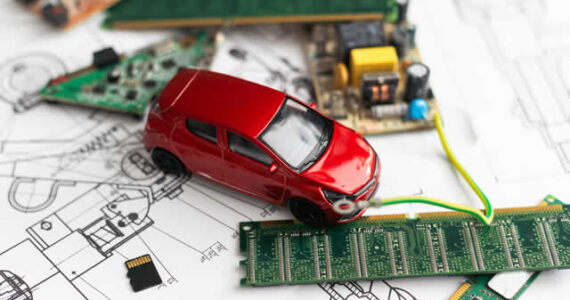
The automotive industry is at a crossroads. Amidst rapidly advancing technology and shifting consumer preferences, manufacturers face significant headwinds.
Chief among these are the ongoing global chip shortage and a complex economic landscape marked by inflation. These challenges are not just hiccups; they are reshaping the industry’s landscape.
This blog post will take you through the intricacies of these issues, their impact on production and innovation, and how industry players are adapting to the new normal.
Whether you’re a car enthusiast or an automotive technology innovator, understanding these dynamics is crucial to navigating and thriving in today’s auto industry.
The Chip Shortage Impact on Production and Innovation
In the heart of every modern vehicle lies a network of semiconductor chips. These tiny components are vital for everything from basic engine functions to advanced driver-assistance systems.
However, the auto industry is facing a crippling chip shortage, disrupting production lines globally. Many manufacturers have scaled back production, delaying new model launches and even cutting back on non-essential features in existing vehicles.
This shortage isn’t just slowing down production; it’s forcing automakers to rethink how they design and prioritize vehicle features.
The chip shortage has a cascading effect on innovation. With limited chips available, manufacturers are prioritizing high-demand models and essential features over cutting-edge technology.
This could slow the rollout of next-generation innovations like fully autonomous driving systems or enhanced connectivity features. On the flip side, it presents an opportunity. Automakers can reassess their product offerings, possibly leading to more efficient, focused innovation that better meets consumer needs.
For innovators in the field, understanding the chip shortage’s impact is crucial. It underscores the importance of flexibility in design and production processes. Companies are exploring alternative suppliers and investing in chip manufacturing to mitigate these issues.
This proactive approach not only addresses immediate shortages but also builds resilience against future disruptions.
Economic Factors Inflation, Consumer Behavior, and Car Sales
Beyond chips, economic factors play a significant role in shaping the auto industry. Inflation has driven up the cost of raw materials, production, and, ultimately, vehicle prices.
This increase in costs has trickled down to consumers, influencing their purchasing behavior. High vehicle prices, coupled with economic uncertainty, have led some consumers to delay purchases or opt for used vehicles instead.
The shift in consumer preferences is palpable. There’s a growing demand for fuel-efficient and electric vehicles as consumers look to save on long-term operational costs amidst rising fuel prices.
Additionally, the pandemic has accelerated interest in online car buying, with consumers increasingly preferring to browse and purchase vehicles digitally. For auto companies, these shifts necessitate a reevaluation of sales and marketing strategies to align with changing consumer behaviors.
Auto manufacturers are responding to these economic challenges by implementing strategic measures. Some are offering more flexible financing options to ease the financial burden on consumers. Others are expanding their digital presence to tap into the growing online market.
By staying attuned to economic trends and consumer preferences, auto companies can better position themselves to weather the current storm.
Innovations and Solutions How the Auto Industry is Adapting
Despite these challenges, the auto industry is not standing still. In fact, adversity is often a catalyst for innovation. To combat the chip shortage and economic pressures, many automakers are adopting innovative strategies that promise to reshape the industry.
One such strategy is supply chain diversification. By sourcing components from multiple suppliers and regions, companies reduce dependency on a single point of failure. This not only helps mitigate the impact of shortages but also enhances overall supply chain resilience.
New manufacturing processes are also gaining traction. Automakers are investing in advanced manufacturing technologies, such as 3D printing and AI-driven production systems, to increase efficiency and reduce reliance on scarce components. These technologies enable manufacturers to produce parts on-demand, reducing lead times and inventory costs.
Digital solutions are transforming sales and marketing strategies. Virtual showrooms, augmented reality (AR) test drives, and AI-powered customer service tools are enhancing the buying experience, making it more convenient and engaging for consumers. These innovations not only drive sales but also build brand loyalty by offering personalized, seamless interactions.
The Future Outlook What Lies Ahead for the Auto Industry
Looking ahead, the auto industry faces a mixed outlook. The chip shortage and economic challenges may persist in the short term, but the industry’s resilience and adaptability offer reasons for optimism. Long-term recovery will likely hinge on continued innovation and strategic adaptation.
The future of mobility is set to be defined by technological advancements and sustainability. Electric vehicles and autonomous driving are poised to become mainstream, driven by regulatory support and consumer demand for eco-friendly options.
The push for sustainability extends beyond vehicles, encompassing manufacturing processes and supply chain practices as well.
Collaboration and partnerships will play a critical role in shaping the industry’s trajectory. Automakers may increasingly partner with tech companies to leverage their expertise in software and connectivity, driving innovation in vehicle design and functionality.
These collaborations can accelerate the development of new technologies and create synergies that benefit both parties.
Conclusion
In conclusion, the auto industry is navigating a complex landscape of challenges and opportunities. The chip shortage and economic pressures underscore the need for adaptability and innovation.
By leveraging technology and strategic planning, the industry can not only overcome these hurdles but also emerge stronger and more resilient. For automotive technology innovators and car enthusiasts, staying informed about these dynamics is essential to capitalize on the opportunities that lie ahead.
Continued innovation, collaboration, and a focus on sustainability will be key to shaping the future of mobility. As we move forward, the auto industry will continue to evolve, driven by a shared commitment to progress and excellence.
image credit: envato.com


 Gracie Hayden: Exactly, If we maintained our vehicle regularly, It will work properly...
 nathaliebieleu: This is one to get roadworthy and just drive and enjoy...
 James King: What if someone suffer from bad credit history?...
 Dorothy Catlett: I think, Parents should teach their kids by purchase a car with LOAN t...


